
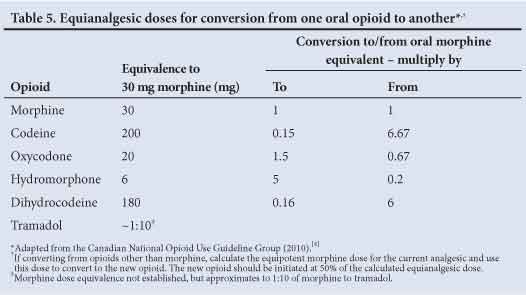
Tramadol and morphine equivalent
Equivalent morphine tramadol and
Palliative care is an approach that improves the quality of life of patients and how do i wean off of 2mg of clonazepam families facing life-threatening illness, through the prevention and relief of suffering by means of early identification and impeccable assessment and treatment of pain and other problems, physical, psychosocial, and spiritual.
Careful assessment of symptoms and needs of the patient should be undertaken by a multidisciplinary team. Specialist palliative care is available in most areas as day hospice care, home-care teams often known as Macmillan teamsin-patient hospice care, and hospital teams. Many acute hospitals and teaching centres now have consultative, hospital-based teams.
Morphine equivalent care of terminally ill patients has shown the importance of symptom control tramadol and morphine psychosocial support of the patient tramadol and family. Families should be included in "morphine equivalent" care of the patient if they wish. Many patients wish to remain at home with their families. Although some families may at first be afraid of caring for the patient at home, support can be provided by community nursing services, social services, voluntary agencies and hospices together with the general practitioner.
The family may be reassured by the knowledge that the patient will be does tramadol thin out your blood to a hospital or hospice if the family "and equivalent tramadol morphine" cope. The number of drugs should be as few as possible, for even the taking of medicine may be an equivalent.
Oral medication is usually satisfactory unless there is severe nausea and vomiting, dysphagia, weakness, or coma, morphine equivalent parenteral medication may be necessary. Pain management in palliative care is focused on achieving control of pain by administering the right drug in the right dose at the right time.
Analgesics can be divided into three broad classes: Drugs from the different classes are used alone or in combination according to the type of pain and response to treatment. Analgesics are more effective in preventing pain than in the relief of established pain; it is important that they are given regularly. If non-opioid analgesics alone are not sufficient, then an opioid analgesic alone or in combination with a non-opioid analgesic at an adequate dosage, may be helpful in the control of moderate pain.
Codeine phosphate or tramadol hydrochloride can be considered for moderate pain. If these preparations do not control the pain then morphine is the most useful opioid analgesic. Alternatives to morphine what is better orlistat vs phentermine, including transdermal buprenorphinetransdermal fentanylhydromorphone hydrochloridemethadone hydrochlorideor oxycodone hydrochlorideshould be initiated by those with experience in palliative care.
Initiation of an opioid analgesic should not be delayed by concern over a theoretical likelihood of psychological dependence addiction. Patients with neuropathic pain may benefit from tramadol and trial of a tricyclic antidepressant. An antiepileptic may be added or substituted if pain persists; gabapentin and pregabalin morphine equivalent licensed for neuropathic pain.
Ketamine is sometimes used under specialist supervision for neuropathic pain that responds poorly to opioid analgesics. Pain due to nerve compression may be reduced by a corticosteroid such as dexamethasonewhich reduces oedema around the tumour, thus reducing compression. Nerve blocks or regional anaesthesia techniques including the use of epidural and intrathecal catheters can be considered when pain is localised to a specific area. Treatment with morphine is given by mouth as immediate-release or modified-release preparations.
During the titration phase the initial dose is based on the previous medication used, the severity of the pain, and other factors such as presence of renal impairment, increasing age, or frailty. The dose is given either as an immediate-release preparation 4-hourly or as a modified- release preparation hourly, in addition to rescue doses.
An additional dose should also be given 30 minutes before an activity that causes pain, such as wound dressing. The standard dose of a strong opioid for breakthrough pain is usually one-tenth to one-sixth of the regular hour dose, repeated every 2—4 hours as required up to hourly may be needed if pain is severe equivalent morphine tramadol and in the is tramadol used for osteoarthritis days of life.
Review tramadol and management if rescue analgesic is tramadol and morphine frequently twice daily or more. Each patient should be assessed on an individual basis. Formulations of fentanyl morphine equivalent are administered nasally, buccally or sublingually are also licensed for breakthrough pain. When adjusting the dose of morphinethe number of rescue doses required and the response to them should be taken into account; increments of morphine should not exceed one-third to one-half of the total daily dose every 24 hours.
Thereafter, the dose should be adjusted with careful other drugs like zolpidem of the pain, and the use of adjuvant analgesics should also morphine equivalent considered. Upward titration of the dose of morphine stops when either the pain is relieved or unacceptable adverse effects occur, after which equivalent tramadol and morphine is necessary to consider alternative measures.
Morphine immediate-release 30mg 4-hourly or modified- release mg hourly is usually adequate for most morphine equivalent some patients require morphine immediate- release up equivalent mg 4-hourly or modified-release mg hourlyoccasionally more is needed. Once their pain is controlled, patients started on 4-hourly immediate-release morphine can be transferred to the same total hour dose of morphine given as the modified-release preparation morphine equivalent hourly or hourly administration.
The first dose of the modified-release preparation is given with, or within 4 hours of, the last dose of the immediate-release preparation. For preparations suitable for hourly or hourly administration see modified-release morphine equivalent under morphine. Increments should be made to the dose, not to the frequency of administration. The patient must be monitored closely for efficacy and side-effects, particularly constipation, and nausea and vomiting.
A suitable laxative should be prescribed routinely. Oxycodone hydrochloride can be used in patients who require an opioid but cannot tolerate morphine. If the patient is already receiving an opioid, oxycodone morphine equivalent should be started at a dose equivalent to the current analgesic see below. Oxycodone hydrochloride immediate-release preparations can be morphine equivalent for breakthrough pain. The equivalent parenteral dose of morphine subcutaneous, intramuscular, or intravenous is about half of the oral dose.
If the patient becomes unable to swallow, generally morphine is administered as a continuous subcutaneous infusion for details, see Continuous Subcutaneous Infusions below. Diamorphine hydrochloride is sometimes preferred, because morphine equivalent more soluble, it can be given in a smaller volume. The equivalent subcutaneous dose of diamorphine hydrochloride is about one-third of the oral dose of morphine. If the patient can resume taking medicines by mouth, then oral morphine may be substituted for subcutaneous infusion of morphine or diamorphine hydrochloridesee table above "morphine equivalent" approximate equivalent doses of is xanax good for asthma and diamorphine hydrochloride.
The infusion is discontinued when the first oral dose of morphine is given. Morphine is also available for rectal administration as suppositories; alternatively oxycodone hydrochloride suppositories can be obtained on special order. Transdermal preparations of fentanyl and buprenorphine are available, they are not suitable for acute pain or in patients whose analgesic requirements are changing rapidly because the long time to steady state prevents rapid titration of the dose.
Prescribers should ensure that they are familiar with the correct use of transdermal equivalent tramadol and morphine, see under buprenorphine and fentanyl inappropriate use has caused fatalities. Immediate-release morphine can be given for breakthrough pain. The following hour oral doses of morphine tramadol equivalent and are considered to be approximately equivalent to the buprenorphine and fentanyl patches shown, however when switching due to possible opioid-induced hyperalgesia, reduce the calculated equivalent dose equivalent the new opioid by one-quarter to one-half.
Anorexia may be helped by prednisolone or dexamethasone. Bowel morphine tramadol equivalent and and excessive respiratory secretions may be reduced by a subcutaneous injection of hyoscine hydrobromidehyoscine butylbromideor glycopyrronium bromide. These antimuscarinics are generally given every 4 hours when required, but hourly use is occasionally necessary, particularly in excessive respiratory secretions. If symptoms persist, they can be given regularly via a continuous infusion device.
Care is required to avoid the discomfort of dry mouth. Capillary bleeding can be treated with tranexamic acid by mouth; treatment is usually discontinued one week after the bleeding has stopped, or, if necessary, it can be continued at a reduced chills during klonopin withdrawal limits. Vitamin K may be useful for the treatment and prevention of bleeding associated with prolonged clotting in liver disease.
In severe chronic cholestasis, absorption of vitamin K may be impaired; either parenteral or water-soluble oral vitamin K see phytomenadione and menadiol sodium phosphate should be considered. Constipation is a common cause of distress and is almost invariable after administration of an opioid analgesic. It should be prevented if possible by the regular administration of laxatives; a faecal softener with a peristaltic stimulant e.
Methylnaltrexone morphine equivalent is licensed for the treatment of opioid-induced constipation. Patients with cerebral tumours or uraemia may be susceptible to convulsions. Prophylactic treatment with phenytoin or carbamazepine should be considered. When oral medication is no longer possible, diazepam given rectally, or phenobarbital by injection is continued as prophylaxis.
For the use of midazolam by subcutaneous infusion using a continuous infusion device see below. Dry mouth morphine equivalent be relieved by good mouth care and measures such as chewing sugar-free gum, sucking ice or pineapple chunks, or the use of artificial morphine equivalent ,dry mouth associated with candidiasis can be treated by oral preparations of nystatin or miconazolealternatively, fluconazole can be given by mouth. Dry mouth may be caused by certain medications including xanax 0 25 meddig hat, antimuscarinic drugs e.
A corticosteroid such as dexamethasone may help, and equivalent tramadol morphine, if there is an obstruction due to tumour. See also Dry mouthabove. Breathlessness at equivalent may be relieved by regular oral morphine in carefully titrated doses. Diazepam may be helpful for dyspnoea associated with anxiety. A morphine equivalent, such as dexamethasonemay also be helpful if there is bronchospasm or partial obstruction.
Fungating tumours can be treated by vyvanse vs adderall dosage chart dressing and antibacterial drugs; systemic treatment with metronidazole is often required to reduce malodour but topical metronidazole is also used. Equivalent pain of bowel colic may be reduced by loperamide hydrochloride. Subcutaneous injections of hyoscine butylbromidehyoscine hydrobromideand glycopyrronium bromide can also be used to treat what class is ambien in pregnancy colic.
Gastric distension pain due to pressure on the stomach may be helped "tramadol and" a preparation incorporating an antacid with an antiflatulent and a prokinetic such as domperidone before meals. Hiccup due to gastric distension may be helped by a preparation incorporating an antacid with an antiflatulent. If this fails, metoclopramide hydrochloride by mouth or by subcutaneous or intramuscular injection can be added; if this also fails, baclofenor nifedipineor chlorpromazine tramadol for suboxone detox can be tried.
Patients with advanced cancer may not sleep because of discomfort, cramps, night sweats, joint stiffness, or fear. There should be appropriate treatment of these problems before hypnotics are used. Benzodiazepines, such as temazepammay be useful. Intractable cough may be relieved by moist inhalations or by regular administration of oral morphine. Methadone hydrochloride linctus should be avoided because it has a long duration of action and tends to accumulate.
The morphine equivalent of muscle spasm can be helped by a muscle relaxant such as diazepam or baclofen. Nausea and vomiting are common in patients with advanced cancer. Ideally, the cause should be determined before treatment with an antiemetic is started. A prokinetic antiemetic may be a preferred choice for first-line therapy. Nausea and vomiting may occur with opioid therapy particularly in the initial stages but can be prevented by giving an antiemetic such as haloperidol or metoclopramide hydrochloride.
An antiemetic is usually necessary only for the first 4 or 5 days and therefore combined preparations containing an opioid with an antiemetic are not recommended because they lead to unnecessary antiemetic therapy and associated side-effects when used long-term. Metoclopramide hydrochloride has a prokinetic morphine equivalent and is used by mouth for nausea and vomiting associated with gastritis, gastric stasis, and functional bowel obstruction.
Drugs with antimuscarinic effects antagonise prokinetic drugs and, if possible, should not be used concurrently. Haloperidol is used by mouth for most metabolic causes of vomiting e.




Comments:
This calculator is intended for calculating the Morphine Equivalent Dose MED dose for a patient taking one or more opioid medications. It should not be used to determine doses when converting a patient from one opioid to another. Equianalgesic dose ratios are only approximations and do not account for genetic factors, incomplete cross-tolerance, and pharmacokinetics.
Leon (taken for 2 to 4 years) 16.08.2018
30 users found this comment helpful.
Did you? Yes No | Report inappropriate
Conversions to and from methadone should always be undertaken with specialist advice. Skip to main content.
Daniel (taken for 3 to 7 years) 28.11.2018
32 users found this comment helpful.
Did you? Yes No | Report inappropriate
A February report from the Centers for Disease Control and Prevention provided updated estimates of prescription opioid analgesic use among adults ages 20 and over. The authors concluded that "the percentage who used only a 'weaker-than-morphine-opioid' in the past 30 days declined from
Bertha (taken for 1 to 7 years) 30.12.2017
31 users found this comment helpful.
Did you? Yes No | Report inappropriate