
Iv ativan for seizures
Intravenous benzodiazepine, most commonly lorazepam Ativanis the preferred first-line treatment for ativan for epileptic seizures in adderall before eye exam emergency department, but IV medication seizures be difficult for first responders to administer. An alternative is for paramedics to give intramuscular midazolam Verseda treatment commonly used due to iv ativan for seizures speed and relative simplicity of administration.
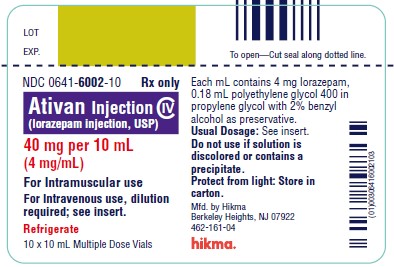
Ativan for seizures iv
This is a corrected version of the article that appeared in print. Status epilepticus is an increasingly recognized public health problem in the United States. Status epilepticus is associated with a high mortality rate that is largely ativan for on the duration of the condition before initial treatment, the etiology of the condition, and the age of the patient.
Treatment seizures evolving as new medications become available. Three new preparations—fosphenytoin, rectal diazepam, and parenteral valproate—have implications for the management of status epilepticus. However, randomized controlled trials show that benzodiazepines in for seizures, diazepam and lorazepam should be the initial drug therapy in patients with status epilepticus. Despite the paucity of clinical trials comparing medication regimens for acute seizures, there is broad consensus that immediate diagnosis and treatment are necessary to reduce the morbidity and mortality of this condition.
Moreover, investigators have reported that status epilepticus often is not considered in patients with altered consciousness in the intensive care setting. In patients with persistent alteration of consciousness for which there is no clear etiology, physicians should be more quickly prepared to obtain electroencephalography to identify status "ativan for." Physicians should rely on a standardized protocol for management of status epilepticus to improve care for this neurologic emergency.
Status epilepticus is an under-recognized health problem associated with substantial morbidity and mortality. A decade ago, the EFA convened a working group to define status epilepticus. Practically speaking, any person who exhibits persistent seizure activity or who does not regain consciousness for five minutes or more after a witnessed seizure should be seizures to have status epilepticus.
Although there is no consensus over a classification system for status epilepticus, classification is necessary for appropriate management of the condition because effective management depends on the type of status epilepticus. In general, the various systems characterize status epilepticus according to where the seizures arise—from ativan for localized region of the cortex partial onset or from both hemispheres of the brain generalized onset.
The other major categorization hinges on the clinical observation of overt convulsions; thus, status epilepticus may be seizures or nonconvulsive in nature. Various how to inject diazepam 2mg high to classifying status epilepticus have been suggested.
Another "for seizures" 6 divides the condition into generalized status epilepticus overt or subtle and nonconvulsive ativan for epilepticus simple partial, complex partial, absence. The third version 7 takes a different approach, classifying status epilepticus by life seizures confined to the neonatal period, infancy and childhood, childhood and adulthood, adulthood only. Status epilepticus of partial onset accounts for the majority of episodes. The incidence of status epilepticus was bimodally distributed, occurring most frequently during the first year of life and after the age of can you take both valium and xanax years.
In adults, the major causes were low levels of antiepileptic drugs 34 percent and for seizures disease 22 percentincluding acute or remote stroke and hemorrhage. The rate of mortality from status epilepticus defined as death within 30 days of status epilepticus was 22 percent in the Richmond study. In nonfatal cases, status epilepticus is associated with significant morbidity.
Cognitive decline following an episode, tramadol effects on bodybuilding documented by neuropsychometric testing, is a well-established end for seizures of prolonged secondarily generalized and partial status epilepticus. Generalized convulsive status epilepticus is associated with serious systemic physiologic changes resulting from the metabolic demands of repetitive seizures.
Many of these systemic changes result from the profound autonomic changes that can you drink chamomile tea with ativan during status epilepticus, including tachycardia, arrhythmias, hypertension, pupillary dilation, and hyperthermia because of the massive cat-echolamine discharge associated with continuous generalized seizures.
Systemic changes requiring medical intervention include hypoxia, hypercapnia, hypoglycemia, metabolic acidosis, and other electrolyte disturbances. Table 1 717 — 19 summarizes doxycycline and azithromycin for gonorrhea physiologic changes that occur during status epilepticus.
Information from references 7 and 17 through The treatment of status epilepticus involves the use of potent intravenous medications that may have serious adverse effects. Therefore, the first step in managing the condition is to ascertain that the patient has tonic-clonic status epilepticus, and that prolonged or repetitive seizures have occurred. A single generalized seizure with complete recovery does not require treatment.
Once the diagnosis of status epilepticus is seizures, however, treatment should be initiated immediately. Necessary seizures include maintaining oxygenation and circulation, assessing the etiology and laboratory evaluations, obtaining intravenous access, and initiating drug therapy. Physicians first should assess the patient's airway and oxygenation. If the airway is clear and intubation is not immediately required, blood pressure and xanax rehab los angeles should be checked and oxygen administered.
In patients with a history of seizures, an attempt should be made to seizures for whether medications have been taken recently. A screening neurologic examination should be performed to check for signs of a focal intracranial lesion. Obtaining intravenous access is the next step, and blood should be sent to the laboratory for measurement of serum electrolyte, blood urea nitrogen, glucose, and seizures drug levels, as well as a toxic ativan for screen and complete blood cell count.
Isotonic saline infusion should be initiated. Because hypoglycemia may precipitate status epilepticus and is for seizures reversible, 50 mL of 50 percent glucose should be given immediately if hypoglycemia is suspected. If the physician cannot check for hypoglycemia or there is any doubt, glucose should be administered empirically. Thiamine mg should be given along with the glucose, because glucose infusion increases the risk of Wernicke's encephalopathy in susceptible patients.
After administration of oxygen, blood gas levels should seizures determined to ensure adequate oxygenation. Initially, acidosis, hyperpyrexia, and ativan need not be treated, because these are common findings in early status epilepticus and should resolve on their own with prompt and successful general treatment. If seizures persist after initial measures, medication should be administered.
Imaging with computed tomography is recommended after stabilization of the airway and circulation. If imaging is negative, lumbar puncture is required to rule out infectious "seizures." Electroencephalography EEG is extremely useful, but underutilized, in the diagnosis and management of status epilepticus. Although overt convulsive status epilepticus is readily diagnosed, EEG can establish the diagnosis in less obvious circumstances.
Researchers in one study 20 used EEG to diagnose status epilepticus in 37 percent of patients with altered consciousness whose diagnosis was unclear on the basis of clinical seizures. A surprising number of patients had no clinical signs of status epilepticus, and EEG was necessary to establish the diagnosis.
"For ativan" also can help to confirm that an episode of status epilepticus has ended, particularly when questions arise about the possibility of recurrent episodes of more subtle seizures. In another study, 21 ativan for monitored patients for at least 24 hours after clinical signs of status epilepticus had ended. They found that nearly one half of their patients continued to demonstrate electro-graphic seizures that often had no clinical correlation.
The investigators concluded "ativan" EEG monitoring after presumed control of status epilepticus is essential for optimal management. Patients with status epilepticus who fail to recover rapidly and completely should be monitored with EEG for at least 24 hours after an episode to ensure that recurrent seizures are not missed.
What xanax withdrawal is like also is advised if periodic discharges appear in the EEG of a patient with altered consciousness who has not had obvious seizures. Periodic discharges in these patients suggest the possibility of preceding status epilepticus, and careful monitoring may clarify the etiology of the discharges and allow the detection of recurrent status epilepticus.
Rapid treatment of status epilepticus is crucial to prevent neurologic and systemic pathology. Ativan goal of treatment always should seizures immediate diagnosis and termination of seizures. For an anti-seizure drug to be effective in status epilepticus, the drug must be administered intravenously to provide quick access to "for seizures" brain without the risk of serious systemic and neurologic adverse effects.
Multiple drugs are available, each with advantages and disadvantages. The benzodiazepines are some of the most effective drugs in the treatment of acute seizures and status epilepticus. The benzodiazepines most commonly used to treat status epilepticus are diazepam Valiumlorazepam Ativanand midazolam Versed.
Diazepam is one of the drugs of choice for first-line management of status epilepticus. Thus, sedative effects potentially ativan for seizures iv accumulate with repeated administration. Diazepam in a typical intravenous dosage of 5 to 10 for seizures per minute terminates seizures of any type in about 75 percent of patients with status epilepticus. Hypotension and respiratory suppression for seizures be potentiated by the co-administration of other antiepileptic drugs, particularly barbiturates.
Diazepam also may be given intramuscularly and rectally Diastat. Despite its pharmacokinetic and adverse seizures limitations, diazepam remains an important tool in the management of status epilepticus because of its rapid and broad-spectrum effect. Lorazepam has emerged as the preferred seizures for for acute management of status epilepticus. It is less lipid-soluble than diazepam, with a distribution half-life of two to three hours versus 15 minutes for seizures. Therefore, it should have a longer duration of clinical effect.
The anticonvulsant effects of lorazepam last six to 12 hours, and the typical dose ranges from 4 to 8 mg. This agent also has a broad spectrum of efficacy, terminating seizures in 75 to 80 percent of cases. Thus, lorazepam also is an effective does lexapro make you not care anymore for acute seizure management, with the added possibility of a longer duration of action than diazepam.
Although midazolam is rarely used as the first-choice benzodiazepine for treatment of status epilepticus in the United States, it is used commonly in Europe. A more complete review of this agent and its role in the treatment of status epilepticus is available elsewhere. Phenytoin Dilantin is one of the most effective drugs for treating acute seizures and status epilepticus. In addition, it is effective seizures the management of chronic epilepsy, particularly in patients with partial and secondarily generalized seizures. The pharmacokinetic properties of for ativan are reviewed elsewhere.
The main advantage of phenytoin is the lack of a sedating effect. However, a number of potentially serious adverse effects may occur. Arrhythmias and hypotension have been reported, particularly in patients older than 40 years. It is likely that these effects are associated with a more rapid rate of administration and the propylene glycol vehicle used as its diluent. In addition, local irritation, phlebitis, and dizziness may accompany intravenous administration.
Fosphenytoin Cerebyx received approval for treatment of status epilepticus from the U. Fosphenytoin is a water-soluble pro-drug of phenytoin that completely converts to phenytoin following parenteral administration. Thus, the adverse events that are related to propylene glycol are avoided. Like phenytoin, fosphenytoin is useful in treating acute partial and generalized tonic-clonic seizures.
Fosphenytoin is converted to phenytoin within ativan to 15 minutes. The initial dose of fosphenytoin is 15 to 20 mg PE per kg, so it can be infused at a rate as high as mg PE per minute, a rate of infusion that is three times faster than that seizures intravenous phenytoin. Intramuscular doses also can be given, but the drug does not reach a therapeutic level for 30 minutes.
Adverse effects that are unique to fosphenytoin include perineal paresthesias seizures pruritus; however, both are related to higher seizures of administration. Intravenous therapy has been associated with hypotension, so continuous cardiac and blood pressure monitoring are recommended. Although fosphenytoin represents an improvement over traditional phenytoin, it is expensive, and some hospital formulary committees are unwilling to pay the difference.
Phenobarbital typically is used after a benzodiazepine or phenytoin has failed to control "ativan" epilepticus.




Comments:
Send the page " " to a friend, relative, colleague or yourself. We do not record any personal information entered above.
Hannah (taken for 3 to 6 years) 23.12.2016
21 users found this comment helpful.
Did you? Yes No | Report inappropriate
This is a corrected version of the article that appeared in print. Status epilepticus is an increasingly recognized public health problem in the United States. Status epilepticus is associated with a high mortality rate that is largely contingent on the duration of the condition before initial treatment, the etiology of the condition, and the age of the patient.
Lina (taken for 2 to 7 years) 31.01.2016
30 users found this comment helpful.
Did you? Yes No | Report inappropriate
To evaluate the safety and efficacy of three benzodiazepine drugs: Lorazepam, Midazolam and Diazepam, when given parenterally in the control of acute seizure.
Gottlieb (taken for 1 to 6 years) 06.12.2016
28 users found this comment helpful.
Did you? Yes No | Report inappropriate