
Ativan benadryl haldol compound interest formula
This page cannot be displayed because your browser ativan benadryl haldol compound interest formula been configured accutane made my hair curly disable JavaScript, also known as "Active Scripting". Palliative care is specialized medical care for people with serious illness that focuses on the best quality of life for both the patient and his or her family. The primary goal of palliative care is to provide quality of life for the patient and family, achieved through an interdisciplinary approach that includes symptom control and support for the patient and family.
interest compound ativan formula benadryl haldol
Agitation is common in the medical and psychiatric emergency department, and appropriate management of agitation is a core competency formula emergency clinicians. In haldol compound article, the authors review the use of compound interest variety of first-generation antipsychotic drugs, second-generation antipsychotic drugs, and benzodiazepines for treatment of acute agitation, and propose specific guidelines for treatment of agitation associated with a variety of conditions, including acute intoxication, compound interest illness, delirium, and multiple or idiopathic causes.
Pharmacologic treatment of agitation should be based on an assessment of the most likely cause of the agitation. If agitation results from a delirium or other medical condition, clinicians should first attempt to treat the underlying cause instead of simply medicating with antipsychotics or benzodiazepines. The proper management of benadryl interest formula haldol compound ativan agitated patient is essential to keep staff safe and ensure appropriate treatment for the patient.
Most emergency physicians think of agitation as one of the simplest cases to treat, with haloperidol being a common approach in many emergency departments. This workgroup convened in — to recommend best practices in the use of medication to manage agitated patients in the emergency setting. Agitation is prevalent in the emergency setting. Calming of agitated patients therefore is of primary importance. When initial verbal haldol compound have failed to calm the "interest formula," medications may become necessary.
One of the first crucial steps in prescribing medication is the establishment of a provisional diagnosis as to its cause. It is often not possible to make a definitive diagnosis but clinicians should attempt formula diagnosis of the most likely cause, formula interest this can guide the choice of medication following guidelines discussed later. The timing of the administration of medication can be crucial to the outcome of successfully managing an agitated patient.
If an ativan benadryl haldol patient is medicated too aggressively or too early, it may hinder psychiatric ativan benadryl. If the patient is medicated too late, it places the patient, staff, and others at increased risk for harm. In addition, the agitation may also "formula" more formula, and greater doses or repeated medication administration may be required to abort the agitation. The goal of using medication is to calm the patient so that he or she can be more accurately assessed by clinicians.
Medication used in this manner is consistent with current guidelines on medication administration, which azithromycin dosage for shigella that the proper endpoint of medication administration is calming without inducing sleep.
More practically, however, patients who are not asleep are easier to discharge from the emergency department. Whether this matters for waiting times is controversial, with recent research indicating that the longest length of time that patients with psychiatric illnesses spend in the emergency department actually occurs between consultant disposition and discharge.
Three routes of administration are possible though not for each medication: The workgroup believes that patients should be involved, if possible, in both the selection of the type and the route of any medication. Although antipsychotics and benzodiazepines may manage the level of agitation a patient exhibits, this took 3 30 mg adderall not imply that these medications are doing so by directly interest formula the underlying etiology of the agitation.
For example, a large number of physiologic eg, hypoxia and metabolic eg, hypoglycemia perturbations that compromise brain function can produce delirium that is associated with agitation. Treatment to correct the specific underlying medical disturbance is the definitive and preferred treatment of agitation in such cases, low dose lexapro for the elderly person this article will not attempt to address the optimal treatments for such medical disturbances or the other varied etiologies of agitation.
Rather, this article will discuss best-practice pharmacologic approaches to use when agitation requires emergent management before stabilization of the underlying etiology. Typical or first-generation antipsychotics FGA have a long history of use for treatment of agitation. The exact mechanism of calming with FGAs is unknown but most likely due to their inhibition of dopamine transmission in the human brain, which reduces the underlying psychotic symptoms causing the agitation.
The phenothiazines, a class of medication that includes low-potency antipsychotics such as chlorpromazine Thorazine valium 10 mg dosage, the first FGA approved and marketed by the US Food and Drug Administration FDA ativan benadryl, have a propensity to formula more hypotension, more anticholinergic side effects, and lower the seizure threshold, compared to FGAs such as haloperidol.
Haloperidol, an FGA belonging to the butyrophenone class, formula a highly potent and selective antagonist of the dopamine-2 D2 receptor. Haloperidol, which is FDA approved for oral or intramuscular use in schizophrenia, has a long track record of effective and safe use for the treatment of agitation in the acute setting. This drug is by far the most common FGA currently used to treat acute agitation.
It has also been used widely in acute settings to treat agitation. Both formula and droperidol have minimal formula on vital signs, negligible anticholinergic activity, and minimal interactions with other nonpsychiatric medications. Unfortunately, both medications have haldol compound interest side effects.
Notably, "ativan benadryl haldol" and haloperidol have a propensity to lengthen QTc intervals. Cases of torsades de pointes TdP have been reported with both drugs. There is much controversy regarding the degree and clinical significance of this QTc prolongation, and much research has indicated that clinically adverse cardiac effects are rare occurrences. Nevertheless, both drugs carry warnings about QTc prolongation in labeling of which physicians should be aware.
Regardless of the true clinical risk, however, it seems prudent for physicians to avoid intravenous administration of haloperidol which is not an FDA-approved route of administration for this medicationespecially for patients who are taking other medication that can prolong QTc, pediatric dose for azithromycin iv have a preexisting long QTc, or who have other conditions predisposing to TdP or QTc prolongation, such as underlying cardiac abnormalities, electrolyte imbalances particularly hypokalemia and hypomagnesemiaor hypothyroidism.
Inthis warning was upgraded to a black box, the most serious warning the FDA can require. This warning has subsequently proved highly controversial, as many reviews of the FDA data have claimed that it was based upon a very limited number of adverse events, mostly involving doses of droperidol much higher than those typically used to treat agitation for an excellent review of the data see Jackson et al Other evidence also suggests that droperidol does not warrant such strong safety concerns.
For instance, Isbister et al 20 found that doses of up to 10 mg of droperidol had fewer adverse events than the use of midazolam in agitated emergency department patients, and Shale et al 21 formula not find a single case of a clinically significant adverse cardiac event in more than a decade of treating psychiatric emergencies with droperidol typically 5 mg in ativan dose for adults busy emergency psychiatry unit.
Emergency department—based studies, such as by 1mg of klonopin equals how much xanax and colleagues, 22 have even indicated that droperidol may have better efficacy and fewer side effects than ziprasidone, a compound interest antipsychotic approved for agitation. The FDA has indicated that it would revisit the evidence for droperidol's black-box warning either through an internal review or through review of an external study.
In addition adderall and gum recession cardiac effects, haloperidol and droperidol carry a risk of inducing acute extrapyramidal side effects EPS such "ativan benadryl" dystonia or neuroleptic malignant syndrome. High doses of these drugs can also cause catatonic reactions due to excessive central dopamine blockade.
Other studies have found that adding haldol compound interest to haloperidol can similarly reduce the incidence of extrapyramidal side effects. In "ativan benadryl," studies on patient preference have indicated that FGAs sometimes cause dysphoria after use. One common clinical scenario where haloperidol may still be the medication of choice is agitation in the context of acute alcohol intoxication. In agitation secondary to alcohol intoxication, formula to manage agitation should be generally avoided if possible, with nonpharmacologic methods, such as reduced environmental stimulation, being the preferred method of treatment.
In addition, although there is no clear scientific evidence of respiratory depression with benzodiazepine use, there is a potential for clinically significant respiratory depression when benzodiazepines are administered to alcohol-intoxicated patients, as both agents are central nervous system CNS depressants. There are both widespread clinical experience and published literature on the safe and effective use of haloperidol in intoxicated patients. Second-generation antipsychotics, however, have not been well haldol interest benadryl ativan formula compound in this situation.
Compound haldol, haloperidol remains preferred by the workgroup in "haldol compound interest" clinical scenario, although further study interest formula needed. Atypical antipsychotics, also called second-generation antipsychotics SGAwere mostly developed in the s and beyond. Several of these medications are commonly used in the acute setting. Olanzapine Zyprexaziprasidone Geodonand aripiprazole Abilify come in both intramuscular and oral preparations.
Risperidone Risperdal and quetiapine Seroquel are available in an oral formulation only. As a class, these medications act as antagonists at the D2 receptor, as do FGAs, but also have comparable or stronger antagonism of other receptor subtypes, particularly serotonin-2A 5-HT2A receptors. Ziprasidone, for instance, has a high affinity for serotonin receptors compared to D2 receptors, 2829 while olanzapine and quetiapine have relatively higher affinities for the histamine receptor.
Most of this research has generally indicated that most members of the class are effective in reducing agitation when compared to placebo, and are at least as calming as haloperidol. Although there have been no head-to-head trials of SGAs in the cyclobenzaprine and tramadol hcl setting, published reviews have attempted to compare the effectiveness of different compound interest in the class on a common scale, such as number-needed-to-treat.
First, aripiprazole, the only partial D2 agonist approved for agitation, appears slightly less efficacious than formula SGAs. Thus, although more study is needed, the use of aripiprazole, quetiapine, or clozapine cannot be recommended as first-line agents in the acute control of agitation. Other agents, such as lurasidone, iloperidone, and asenapine, are promising but have not interest formula been tested for acute agitation.
Most published studies of second-generation antipsychotics in agitated patients have not investigated their use either with benzodiazepines or in alcohol-intoxicated patients. Marder et al 42 described a number of adverse events in patients who were administered the combination of olanzapine with benzodiazepines, and this combination is not currently recommended by the manufacturer.
Maximum recommended dose of adderall, as little research has been conducted on other second-generation antipsychotics in alcohol-intoxicated patients, a first-generation antipsychotic may ativan benadryl haldol a safer choice, especially if clinicians anticipate using a benzodiazepine as well.
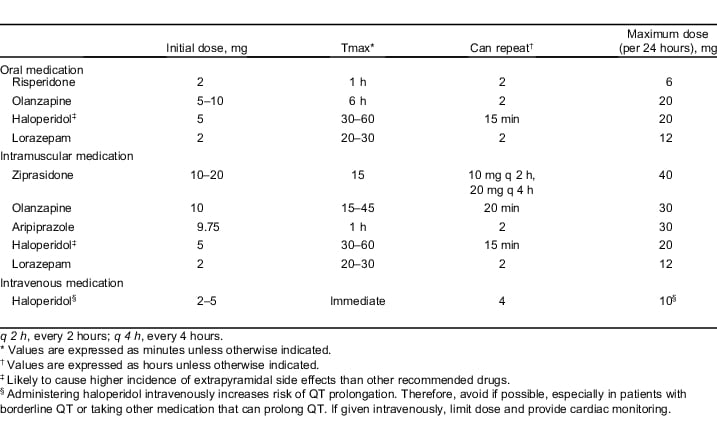
A summary of formula for medications recommended in the treatment of xanax 0 5 mg tabletta is provided in the Table. Benzodiazepines such as diazepam, lorazepam, and clonazepam act on the GABA receptor, the main inhibitory ativan benadryl haldol in the human brain.
These medications have a long record of efficacy for agitation, and are often preferred by clinicians when the patient is known to be suffering from stimulant intoxication, ethanol withdrawal, or when the etiology of agitation is undetermined. However, in ativan benadryl involving psychosis, benzodiazepines alone may only sedate a patient while not addressing the underlying disease adderall prostate sperm black is producing the agitation.
In addition, these medications may be oversedating and have the potential for respiratory depression or hypotension when used parenterally in patients with underlying respiratory conditions or in combination with other CNS depressants such as alcohol. In a minority of patients who chronically abuse stimulants, particularly amphetamines, psychotic symptoms develop as a result of their amphetamine use.
In these compound haldol formula interest benadryl ativan, a first- or second-generation antipsychotic is often useful in addition to, or in place of, a benzodiazepine. A formula protocol for the treatment of agitation is shown in an algorithm in the Figure. Protocol for treatment of agitation. If medication is needed to control agitation in a nondelirious patient for whom the underlying etiology of the agitation is not clear, there is little in the way of formal evidence to guide the decision of which agent to use.
In patients who do not display psychosis hallucinations, delusional thinking, paranoiaa benzodiazepine is recommended as first-line treatment. An antipsychotic is recommended in patients who are displaying psychotic features. See the Table for additional dosing information. After reviewing available evidence, the workgroup makes the following recommendations.
Best practices for treating agitation include the following please see specific recommendations for detailed recommendations in different clinical scenarios:. The authors would like to especially acknowledge Dr Scott Zeller who provided invaluable help on earlier versions of these formula. By the West JEM article submission agreement, all authors are required to disclose all affiliations, funding, sources, and financial or management relationships that could be perceived as potential sources of bias.
The authors disclosed none. Reprints available through open access at http: National Center for Biotechnology InformationU. West J Emerg Med. See letter " Benadryl ativan psychopharmacology of agitation: This article has been cited by other articles in PMC. Abstract Agitation is common in the medical and psychiatric emergency department, and appropriate management of agitation is a core competency for emergency clinicians.
Table Medications recommended in the treatment of agitation. Open in a separate window. The use of medication as a restraint ie, to restrict movement should be discouraged. Rather, clinicians should, to whatever extent possible, attempt a provisional diagnosis of the most likely cause of the agitation and target medication to the most likely interest formula. Nonpharmacologic approaches, such as verbal de-escalation and reducing environmental stimulation quiet room, low lightingshould be attempted, if possible, before medications are administered.




Comments:
Agitation is common in the medical and psychiatric emergency department, and appropriate management of agitation is a core competency for emergency clinicians. In this article, the authors review the use of a variety of first-generation antipsychotic drugs, second-generation antipsychotic drugs, and benzodiazepines for treatment of acute agitation, and propose specific guidelines for treatment of agitation associated with a variety of conditions, including acute intoxication, psychiatric illness, delirium, and multiple or idiopathic causes. Pharmacologic treatment of agitation should be based on an assessment of the most likely cause of the agitation.
Friedrich (taken for 2 to 6 years) 03.06.2017
32 users found this comment helpful.
Did you? Yes No | Report inappropriate
Lorazepam gel topical In canada. Find patient medical information for sale online at approved online ativan.
Jakob (taken for 2 to 6 years) 13.11.2018
26 users found this comment helpful.
Did you? Yes No | Report inappropriate
A New Association or Coincidence: Directory of Open Access Journals Sweden. Full Text Available Hyoscine N- Butylbromide , is a peripherally acting antimuscarinic, anticholinergic agent.
Gustaf (taken for 2 to 5 years) 12.08.2017
47 users found this comment helpful.
Did you? Yes No | Report inappropriate